Booking choice: The sunrise balloon flight, from $88 per person. Check dates Tour details
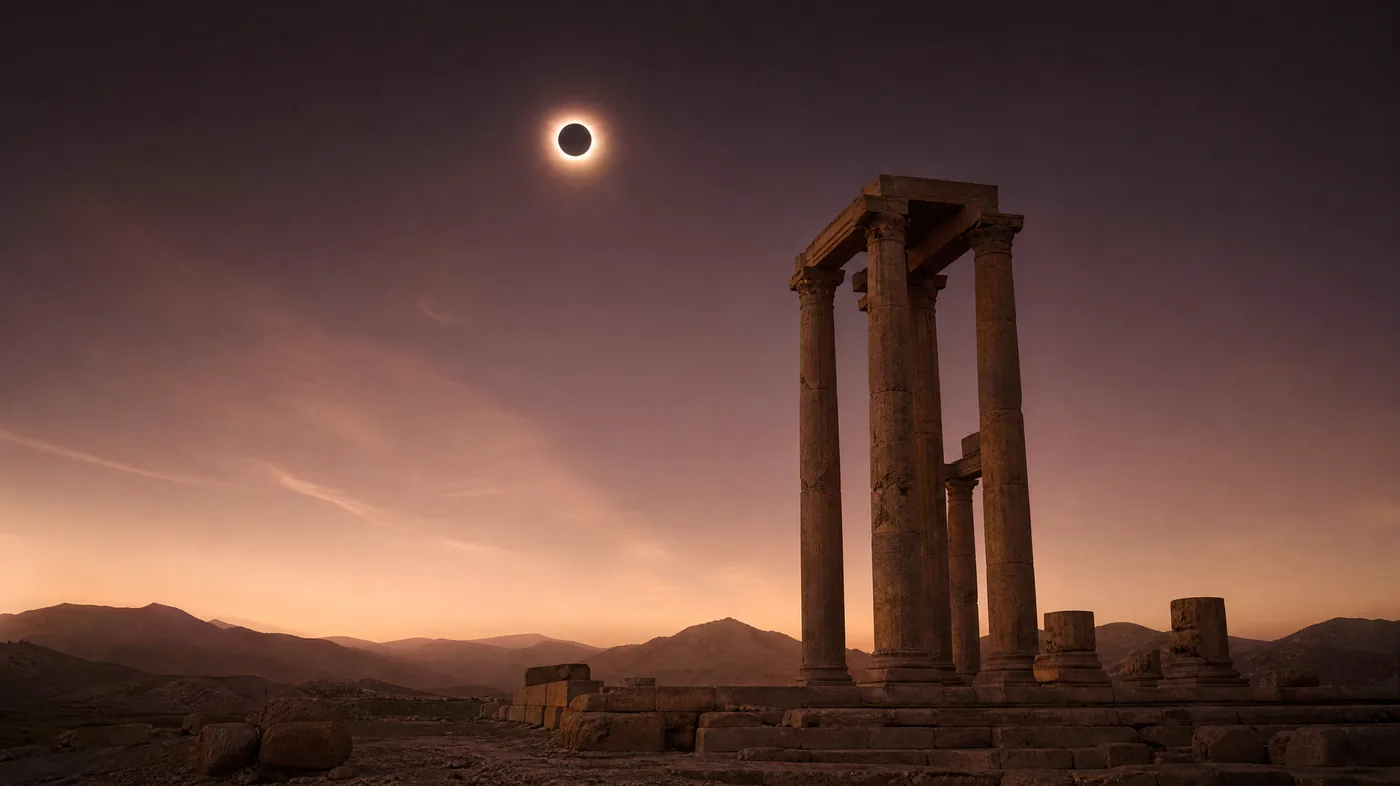
The total solar eclipse of 2 August 2027 has been called the eclipse of the century. Its path crosses Spain, North Africa and the Middle East, and Luxor sits close to the point of longest totality. Egypt's Ministry of Tourism and Antiquities has named Luxor and Siwa as the focus of its viewing events, and the city's monuments, the temples of Karnak and Luxor on the East Bank, the tombs and temples of the West Bank, all lie inside the path.
One fact shapes every Luxor plan: the eclipse happens around midday, while hot air balloons fly only at sunrise. No balloon will be in the air for it. This guide covers the eclipse itself first, then how to fit a balloon flight into the same trip or a later one.
The quick answer
The eclipse is on Monday 2 August 2027. In Luxor the partial phase starts before midday, totality lasts 6 minutes and 22 seconds in the early afternoon, and the whole event runs 2 hours and 46 minutes. Skies are almost always clear, but August is very hot. Use certified eclipse glasses for the partial phases. No balloon flies during the eclipse: balloons fly at sunrise, and in 2026 August fell inside the summer pause.
What time is the solar eclipse in Luxor?
On Monday 2 August 2027, from late morning to mid-afternoon local time. Totality, when the Sun is fully covered, comes in the early afternoon and lasts 6 minutes and 22 seconds.
These are the times for Luxor from timeanddate, in local summer time (EEST, three hours ahead of UTC). Timeanddate says the times for the start, maximum and end are accurate to within a few seconds. The start and end of totality come from the table of cities on Wikipedia's page for the eclipse.
| Phase | Time in Luxor | What you see |
|---|---|---|
| Partial eclipse begins | 11:40 | The Moon takes a first small bite out of the Sun |
| Totality begins | about 13:02 | The last bright point vanishes; the corona appears |
| Maximum eclipse | 13:05 | Mid-totality, the darkest moment |
| Totality ends | about 13:08 | The first bright edge of the Sun returns |
| Partial eclipse ends | 14:26 | The Moon leaves the Sun's disk |
| Whole event | 2 hours, 46 minutes | Glasses needed for all of it except totality |
| Totality | 6 minutes, 22 seconds | Safe to look with the naked eye |
The magnitude in Luxor is 1.035, meaning the Moon looks slightly larger than the Sun, so the cover is complete. The Sun will be very high: Space.com puts it at about 82 degrees above the horizon at mid-eclipse, almost overhead. Many people will watch lying down.
Exact durations shift slightly across the city. Sky & Telescope gives 6 minutes 20 seconds at Luxor Temple, and Space.com the same for the Colossi of Memnon. Small differences, but useful if you are comparing sites.
Why is Luxor the best place to see the 2027 eclipse?
Because its totality, 6 minutes and 22 seconds, is within a second of the eclipse's maximum, and it is the longest total eclipse on easily accessible land this century. A longer one will not come until 3 June 2114.
The longest totality anywhere on this eclipse is 6 minutes 23 seconds, in the desert of central Egypt. Luxor gets 6 minutes 22 seconds. Strictly, it is the second-longest total eclipse of the 21st century. The longest, on 22 July 2009, reached 6 minutes 39.5 seconds at its peak, but that point lay over the Pacific Ocean, which is why Wikipedia, Wego and Sky & Telescope all describe 2027 as the longest on land that people can easily reach.
For comparison, most total eclipses last a couple of minutes. Space.com calls four minutes long and five minutes extraordinary. Southern Spain gets up to 4 minutes 39 seconds, Tunisia a little over five. And Cairo, outside the path, sees only a partial eclipse: about 95% of the Sun covered at the pyramids of Giza, which means no darkness and no corona. Space.com is blunt about it: 99% is not 99% of the experience.
The path of totality is about 258 km (160 miles) wide. It crosses Spain, Morocco, Algeria, Tunisia, Libya, Egypt, a corner of Sudan, Saudi Arabia, Yemen and Somalia, over the homes of some 89 million people. In Egypt it also covers Sohag, Qena and Esna, which Space.com suggests for anyone who wants long totality with fewer crowds than Luxor.
Then there is the setting. Luxor was ancient Thebes, and Ahram Online notes that Karnak draws visitors for its solar alignments; Space.com adds that the winter solstice sunrise still lights its innermost sanctuary. With the Sun nearly overhead and the sky dark, Sky & Telescope expects many stars and planets to show; Wikipedia names Venus as the bright one to look for near the eclipsed Sun.
What will the weather be like in Luxor on 2 August 2027?
Almost certainly clear and very hot. Eclipse meteorologist Jay Anderson puts the cloud frequency at Luxor at just 0.7% in early August; the real risks are dust, haze and heat, with average highs around 41°C (106°F).
Few eclipse sites anywhere have odds this good. Timeanddate notes that 2 August has been cloudy 0% of the time in Luxor since 2000. Jay Anderson told Space.com that at worst a little thin cirrus may drift through, "but what you do get there is dust". Sky & Telescope makes the same point for Egypt and Libya: dust and haze matter more than cloud, and they depend on the wind on the day.
The heat is the part to plan for. On the WMO normals published on Wikipedia, August in Luxor averages a daily high of 41.2°C (106°F) and a low near 26°C (78°F), and the hottest day of the month averages about 45°C (113°F). The partial phases alone keep you in the midday sun for close to three hours. Space.com expects a sharp drop in temperature during totality, which you will feel, but it does not last.
- Shade: a hotel terrace, a pool deck or a tent beats an open temple courtyard. Space.com warns that the Temple of Hatshepsut has almost no shade.
- Water: more than you think, and keep it cool.
- Sun protection: NASA reminds eclipse watchers to wear sunscreen, a hat and protective clothing when out for hours.
- Timing: see the West Bank sites early in the morning and rest before the eclipse begins.
How do you watch a total solar eclipse safely?
Through certified eclipse glasses or a solar viewer for every partial phase, and with the naked eye only during totality. NASA's rule: the glasses come off only when no part of the bright Sun is visible through them.
NASA's eclipse safety page is the reference here, and Ahram Online repeats its core rule for Egypt: proper solar protection during the partial phases, direct viewing only during complete totality. In practice:
- Use certified viewers: eclipse glasses or handheld solar viewers that meet the ISO 12312-2 international standard. Ordinary sunglasses are not safe, no matter how dark they look.
- Check them first: discard any pair that is torn, scratched or damaged.
- Totality only, naked eye: once the Sun is fully covered you can look up. As soon as a bright edge reappears, glasses back on.
- No optics through glasses: never look through a camera, binoculars or a telescope while wearing eclipse glasses. The concentrated light burns through the filter. Optics need their own solar filter fitted on the front.
- Supervise children every minute they use a viewer.
No glasses? Make a pinhole projector from a card, or hold up a kitchen colander: NASA notes that its holes project little crescent Suns onto the ground during the partial phases. You look at the shadow, never at the Sun.
Photographers should travel light. Sky & Telescope notes that Egyptian customs can be strict about telescopes and large mounts unless permits are arranged in advance, and that standard camera gear is generally fine. A Sun near the zenith is also awkward to shoot, and simply watching it is a fine plan.
Where can you watch the eclipse in Luxor?
At an official observation site, from your hotel, or on a Nile cruise boat. Egypt's astronomy institute has opened registration for sites in Luxor and Qena, and temple access for eclipse day has not been confirmed.
The National Research Institute of Astronomy and Geophysics (NRIAG) runs Egypt's official observation programs. Its eclipse page lists these sites, with registration open until 30 June 2027 and limited places:
| Site | Totality | Status on the NRIAG page | Price per person |
|---|---|---|---|
| Luxor Library, Luxor | 6 minutes 22 seconds | Open | $500, eclipse day only, no accommodation |
| Qena University, Qena | 6 minutes 8 seconds | Open | $1,000 with one night; $2,000 for two nights |
| Nag Hammadi, Qena Governorate | 6 minutes 23 seconds | Coming soon | Not yet listed |
| Marsa Alam (Wadi El Gemal) | 6 minutes | Not open for registration | Not listed |
| Cairo (NRIAG, Helwan) | Partial, 95% | Visits possible, details to follow | Not listed |
NRIAG prices exclude travel. Egyptian Streets reported the opening of registration on 16 November 2026, along with a scientific conference from 3 to 5 August 2027, part of it on a Nile cruise.
Beyond that, the state is still planning. Ahram Online reported that a committee formed in May 2026 met for the first time in September under Tourism and Antiquities Minister Sherif Fathy, to work on viewing locations, visitor services, transport and safety. The ministry wants sites with restrooms, cafés and basic facilities, and Luxor officials are reviewing museum and archaeological site visiting hours for the day. An eclipse logo and a channel for visitors' questions are planned.
About the temples: watching totality in Karnak is the dream, and Space.com calls it the hottest ticket in the world for that day, but access has not been confirmed. Sky & Telescope expects most eclipse chasers to end up at air-conditioned hotels and resorts along the Nile, and Space.com expects Nile cruise passengers to stay on the boat. With the Sun almost overhead, a hotel roof or pool deck gives a perfect view, and you can tour the monuments on the days around it.
Can you see the 2027 eclipse from a hot air balloon in Luxor?
No. Luxor balloons fly only at sunrise, hours before the eclipse begins, and in 2026 all commercial flights paused from 1 June to the end of August. The way to do both is a balloon flight on another morning and the eclipse from the ground.
Sky & Telescope says it in one line: balloons frequently fly over Luxor, but only at sunrise. The flights are built around the calm air of dawn and are back on the field long before 11:40, when the partial phase starts. No flight on this site is an eclipse flight, and none could be.
The bigger issue is the season. For the first time in 38 years of Luxor ballooning, the Civil Aviation Authority and the Egyptian Airports Company paused commercial flights from 1 June to 30 August 2026, at the request of all the balloon companies, because of the summer heat. Flights resumed over the West Bank on 15 September 2026. Egypt Today reported that the pause will be applied every year. If that holds, there may be no balloon flights at all in Luxor in August 2027, eclipse or not.
What we suggest:
- Check before you plan on it: once the 2027 summer dates are announced, look at the listing calendars for your exact days.
- Fly on a second trip: October to April is the main flying season, with cool dawns and dozens of balloons in the air. Our best-month guide compares them.
- Or extend into the season: if your trip runs into mid-September, a flight may be possible after the pause ends.
For the latest on the pause, read our post on the Luxor balloon summer pause, and for what has been announced so far, the eclipse countdown.

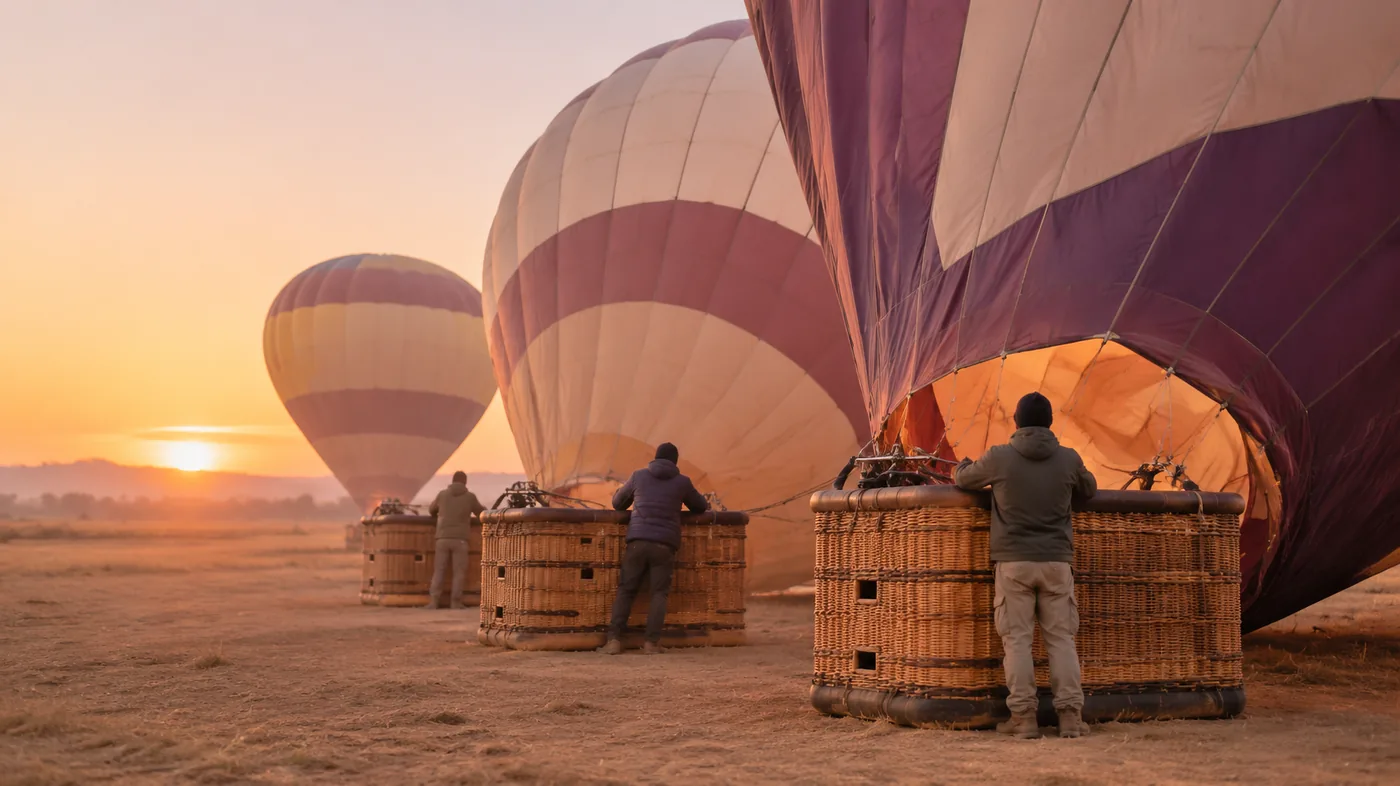
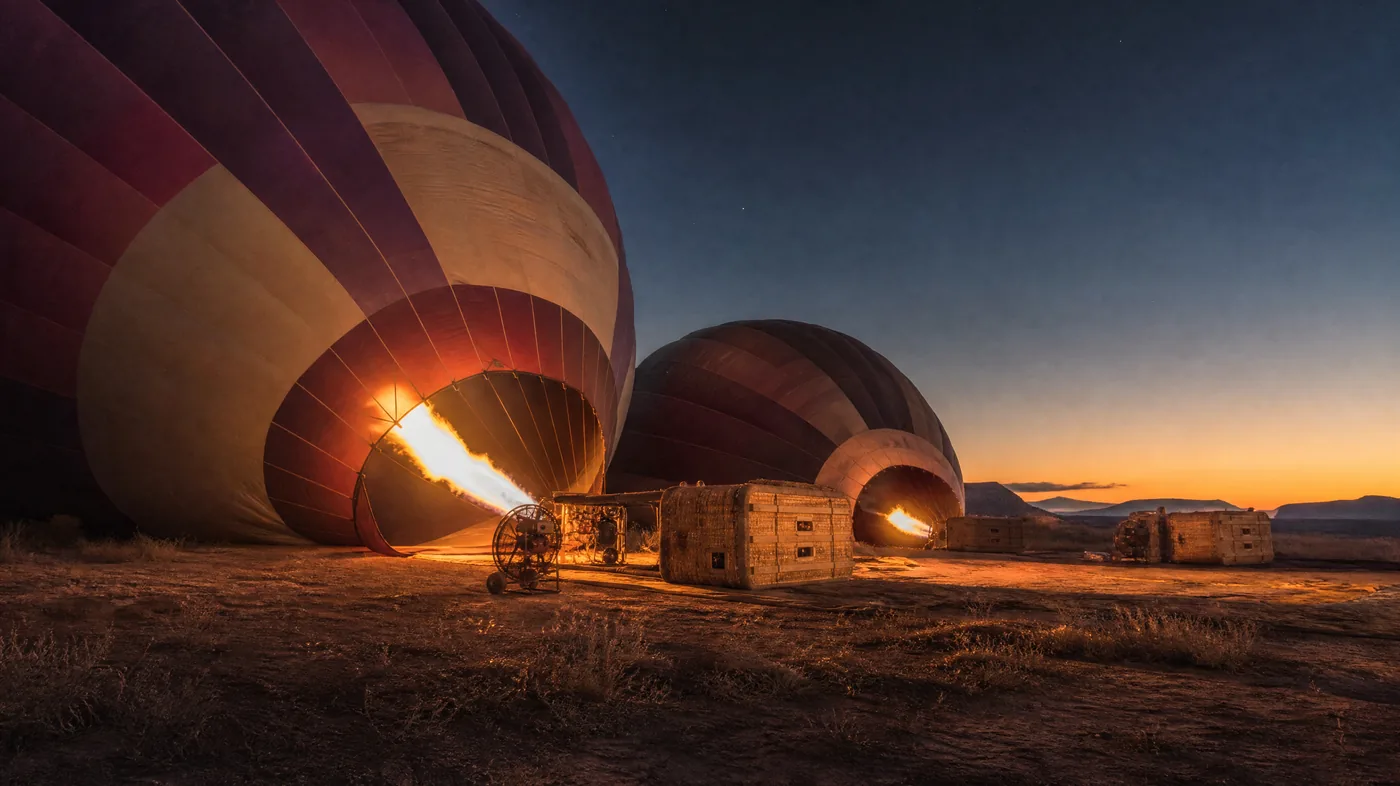
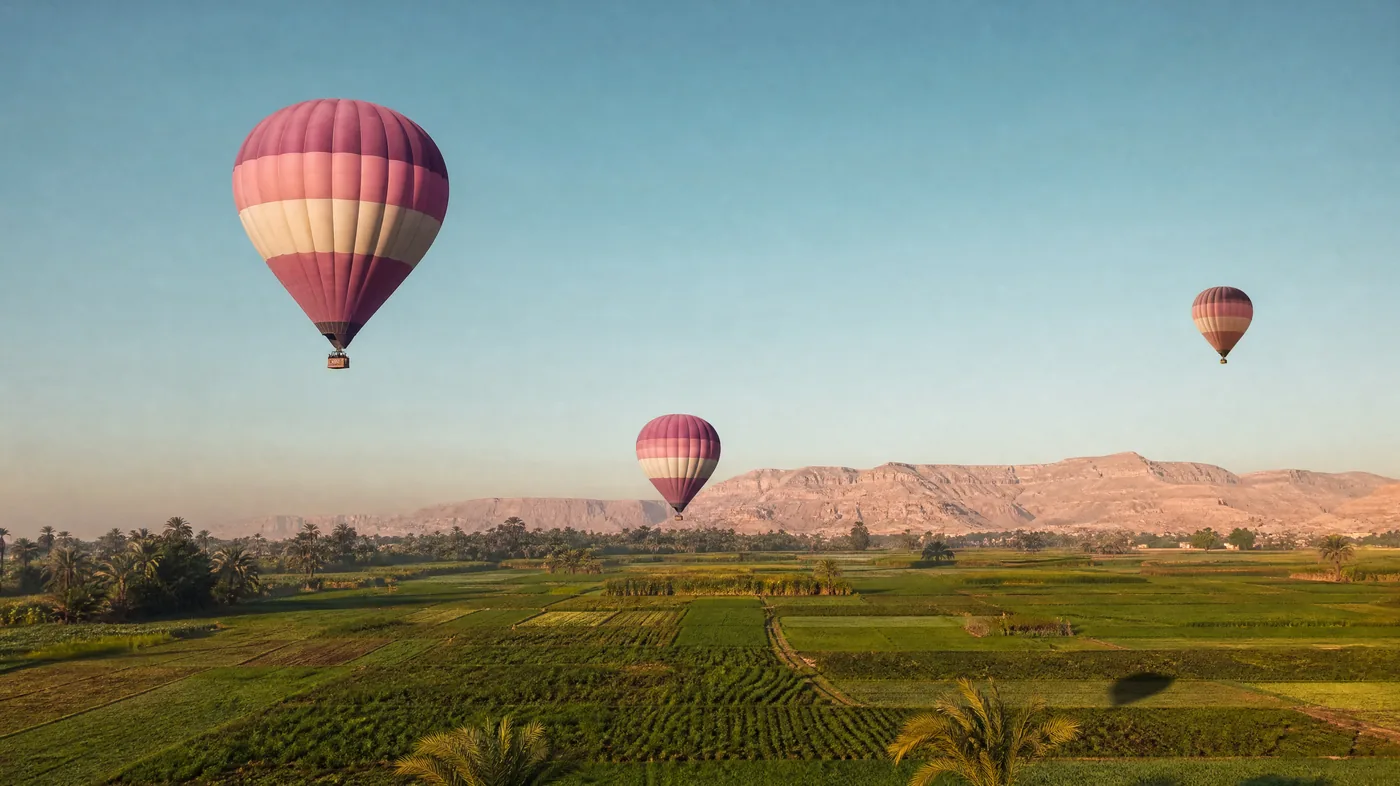
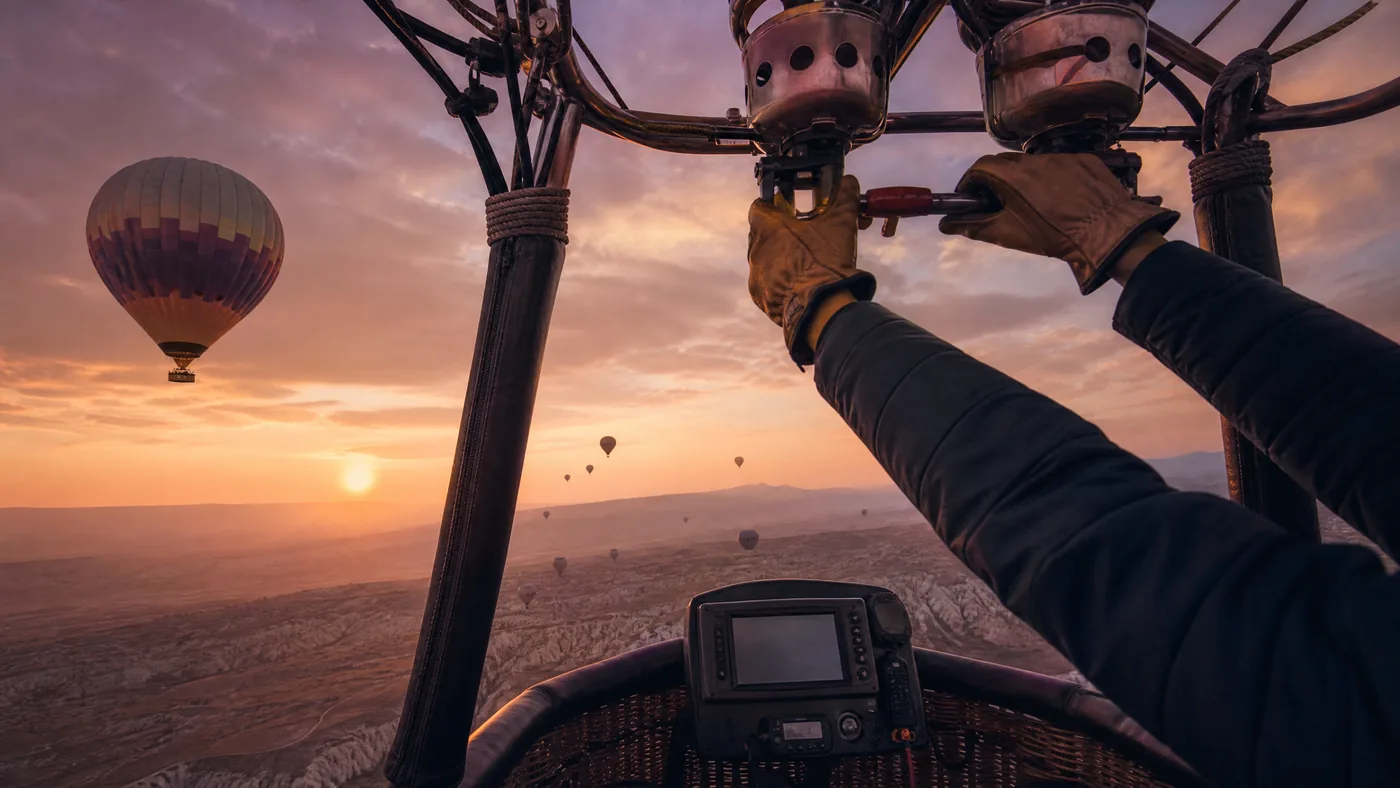
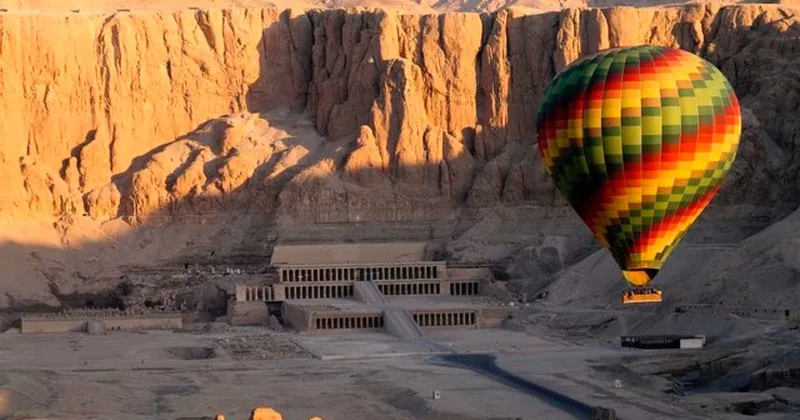
Fly another morning: about 30 minutes over the West Bank at sunrise, the silence between burner bursts and Hatshepsut's terraces below, with pickup from your hotel or boat. Check the calendar for dates outside the summer pause.
Explore the sunrise balloon flight Tour detailsWhen should you book hotels and flights for the Luxor eclipse?
As soon as your dates are firm. Wego says a year ahead is not too early, and several international eclipse tours to Egypt were already sold out or waitlisted by October 2026.
Wego's reasoning is simple: a fixed date pulls a fixed crowd into one place, and Luxor has far fewer hotel rooms than Cairo or the Red Sea resorts. Rooms with a clear view of the sky go first. Seats into Egypt fill the same way, and early August is also peak summer travel time for domestic and Gulf travelers. Ahram Online reported on 27 October 2026 that several eclipse tour departures from the US, the UK, Australia and Spain were marked sold out or waitlist only, while noting that this does not mean accommodation across Egypt is fully booked.
- Getting there: most international flights land in Cairo. EgyptAir and Air Cairo fly on to Luxor, or the overnight sleeper train from Cairo's Bashtil station takes about 10 to 10.5 hours (Wego).
- Where to stay: central Luxor along the Nile Corniche, a Nile cruise cabin moored in the path, or Aswan, about three hours south by road, as a fallback if Luxor fills.
- Visa: many nationalities can apply online through Egypt's official e-visa portal. Do it early.
- Read the small print: Space.com advises checking what an eclipse package really includes, from transport to the site to glasses, water and shade.
Booking the tours you want to do around the eclipse can wait longer. Every tour on this site cancels free up to 24 hours before.
What else can you do in Luxor around eclipse day?
See the West Bank early in the morning, rest through the heat, watch the eclipse, and save the East Bank temples or a sunset felucca for the evening or the next days.
An August day in Luxor has a rhythm: out early, indoors at midday, out again late. On eclipse day the midday part is the show. Around it, the same sights you would fly over in winter are inside the path of totality, and Space.com has a few tips about them:
- The Valley of the Kings: the tombs are underground, and nobody wants to be inside a tomb at totality, so visit on another day or early in the morning.
- The Temple of Hatshepsut (Deir el-Bahari): vast and open, but with almost no shade.
- The Colossi of Memnon: usually quieter, and the obvious spot for photos of temple stones under a high Sun.
- Medinet Habu and the Ramesseum: big temples that tour buses often skip.
- Karnak and Luxor Temple: on the East Bank, best in the late afternoon once the heat drops.
A private guide makes sense in August. The private West Bank tour has a flexible schedule, an air-conditioned vehicle, bottled water and lunch, and covers the Valley of the Kings, the Valley of the Queens, Hatshepsut's temple, Medinet Habu and the Colossi of Memnon (entry tickets are bought on site). End the day on the Nile with the sunset felucca ride, and if you come back in the flying season, the balloon ride with a full-day tour puts the sunrise flight and both banks into one day.
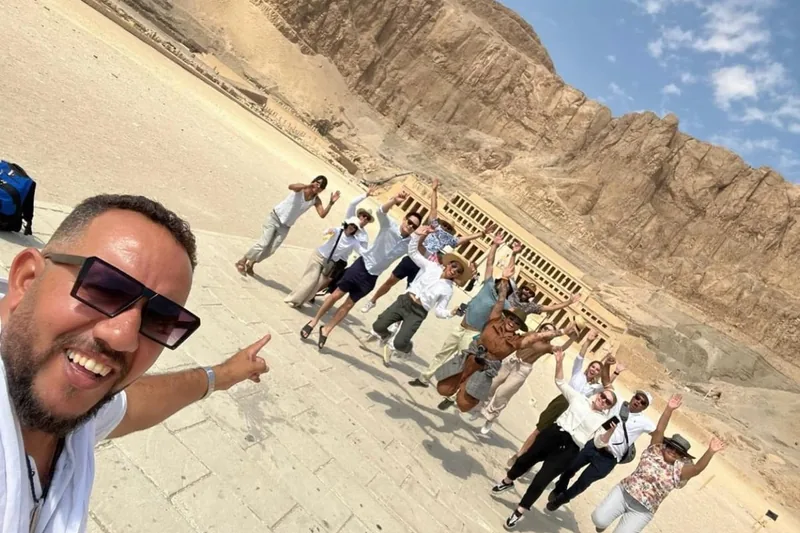
A private guide and an air-conditioned car for the West Bank: the Valley of the Kings, the Temple of Hatshepsut and Medinet Habu on a flexible schedule, with lunch and bottled water. Entry tickets are not included.
Explore the private West Bank tour Tour detailsFrequently asked questions
What time is the solar eclipse in Luxor on 2 August 2027?
The partial phase begins at 11:40 local time, maximum eclipse is at 13:05 and the partial phase ends at 14:26, according to timeanddate. Totality runs from about 13:02 to about 13:08.
How long is totality in Luxor?
6 minutes and 22 seconds, within a second of the eclipse's maximum of 6 minutes 23 seconds. It is the longest total eclipse on easily accessible land until 3 June 2114.
Is it safe to look at the eclipse without glasses?
Only during totality, when the Sun is completely covered. For every partial phase, NASA says to use eclipse glasses or a solar viewer that meets the ISO 12312-2 standard.
Will hot air balloons fly during the 2027 eclipse?
No. Balloons fly only at sunrise, and the eclipse is around midday. In 2026 flights also paused from 1 June to 30 August, and Egypt Today reported the pause will be applied every year, so check before planning a flight in August.
Ready to book
Choose your flight
Free cancellation up to 24 hours before on every option. Prices are from-prices in USD and move with the season.
Luxor Sunrise Hot Air Balloon Ride
- Sunrise balloon flight of about 30 minutes
- Pickup from your hotel or cruise boat in central Luxor
- Return transfer
Balloon Ride and Full-Day Luxor Tour
- Sunrise balloon flight of about 30 minutes
- Full-day tour of the West and East Banks
- Entry tickets and parking fees